


Solid-State Batteries Take to the Road: Mercedes-Benz and Formula 1 Expertise Unite
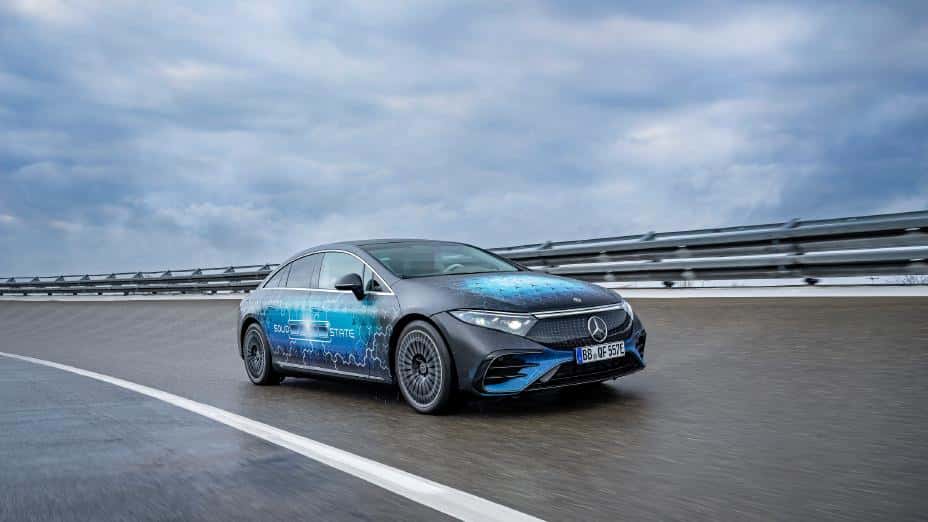
Innovating for a more efficient and sustainable future, Mercedes-Benz is pushing the limits of electric vehicle technology. Teaming up with its Formula 1 engineering powerhouse, Mercedes AMG® High Performance Powertrains (HPP), and the U.S.-based battery pioneers at Factorial Energy, the German automaker has successfully integrated game-changing solid-state battery technology into the Mercedes-Benz EQS Sedan. After rigorous lab testing, the development prototype—boasting a groundbreaking 621-mile range—hit the roads for the first time in February 2025, marking a major milestone in electric mobility.
What Are Solid-State Batteries, and Why Do They Matter?
Unlike conventional lithium-ion batteries, solid-state batteries replace the liquid electrolyte with a solid compound, offering substantial benefits:
- Enhanced Safety: Removing flammable liquid lowers the risk of thermal runaway.
- Higher Energy Density: Next-level energy densities, with gravimetric energy density reaching up to 450 Wh/kg, enable lighter batteries and longer ranges.
- Cutting-Edge Materials: Lithium-metal anodes vastly outperform their lithium-ion counterparts, unlocking performance capabilities that were once limited to theory.
These advances hold massive potential to revolutionize electric vehicles (EVs), offering lighter, safer batteries with a 25% increase in range—qualities that address long-standing customer concerns about EV efficiency and reliability.
Formula 1 Meets Everyday Driving
Mercedes-Benz’s success in bringing Formula 1 expertise to EV technology underscores an industry-first in innovation transfer. HPP, a key player in the development of industry-leading Formula 1 powertrains, collaborated closely with the Mercedes-Benz Center of Competence for Battery Systems to develop a solid-state battery that marries racetrack precision with everyday practicality.
The proprietary design features pneumatic actuators to mitigate expansion and contraction during charging and discharging cycles, a challenge unique to solid-state chemistry. This not only ensures consistent performance but also extends battery lifespan—a testament to the engineering excellence behind this breakthrough.
The EQS Sedan Gets a Futuristic Boost
Mercedes-Benz chose its flagship luxury EV, the EQS Sedan, as the platform for this groundbreaking technology. The prototype vehicle, only slightly modified to accommodate the solid-state battery, leverages passive cooling to minimize weight while maximizing energy efficiency. Equipped with cells engineered by Factorial Energy using their FEST® solid-state platform, the battery offers a range exceeding 621 miles, a 25% improvement over the conventional EQS battery of the same size.
A Leap Beyond the Lab
Solid-state batteries have long existed as a theoretical game-changer—but they’ve struggled to escape the confines of laboratory testing. Until now. Mercedes-Benz’s achievement represents the first real-world implementation of lithium-metal solid-state batteries in a passenger vehicle, proving that this technology is ready for road use. Marcus Schäfer, Chief Technology Officer of Mercedes-Benz Group AG, described the project’s significance:
“Developing an automotive-scale solid-state battery underlines our commitment to innovation and sustainability. We’re excited to announce that we’ve started road testing with a prototype vehicle equipped with this advanced battery technology. This marks a groundbreaking step in making next-gen batteries ready for production.”
The Road Ahead for Solid-State EVs
Over the coming months, Mercedes-Benz will subject this solid-state-equipped EQS prototype to extensive road and lab tests. Engineers will focus on real-world performance metrics, validating energy efficiency, durability, and long-term sustainability. These tests will provide invaluable insights into refining the technology for potential large-scale production.
The collaboration with Factorial Energy, which began in 2021, signals Mercedes-Benz’s strategy to maintain leadership in electric mobility. Factorial’s FEST® platform delivers the energy density and stability needed to meet the high expectations of a luxury EV brand. Their CEO, Siyu Huang, lauded the partnership:
“Being the first to integrate lithium-metal solid-state batteries into a production vehicle platform is groundbreaking. This milestone demonstrates that solid-state battery technology has transitioned from experimental to applicable, proving the future of EVs is already here.”
Why This Matters for EVs and Luxury Cars
Mercedes-Benz’s foray into solid-state battery technology isn’t just about range or safety—it’s about cementing its position in a rapidly changing industry. Customers demand electric vehicles that don’t compromise on convenience, luxury, or performance, and the EQS prototype’s 621-mile range paired with state-of-the-art technology reflects this ethos.
Beyond individual cars, Mercedes-Benz’s work is set to redefine expectations for EV innovation:
- Efficiency at Scale: A key step toward industrializing scalable solid-state solutions.
- Sustainability Leadership: Lower carbon footprints thanks to reduced battery weight and passive cooling mechanisms.
- Luxury Innovation: Aligning state-of-the-art battery tech with brand-defining comfort and elegance.
From the Racetrack to the Road
It’s worth noting that HPP’s role extends beyond powertrain development into advanced battery innovation. Their expertise in high-stakes performance engineering, honed on the Formula 1 circuit, accelerates progress for wider-scale, mainstream automotive applications. Faster adoption means less time spent waiting for advances to trickle down to the consumer level.
The Future Begins Now
By testing real-world solid-state batteries in a passenger vehicle, Mercedes-Benz has demonstrated that cutting-edge engineering can reshape the landscape of modern transportation. The milestone is more than a technical triumph—it’s a clear signal to competitors, customers, and the industry at large that the future of luxury EVs lies not just in vision but in actionable, deliverable innovation.
Solid-state battery-equipped vehicles like the EQS prototype bring us closer to solving EV pain points like range anxiety, weight constraints, and efficiency losses. For tech enthusiasts, car lovers, and Formula 1 devotees alike, this collaboration between Mercedes-Benz and Factorial Energy promises a thrilling new chapter for electric mobility.
0 comment(s) so far on Solid-State Batteries Take to the Road: Mercedes-Benz and Formula 1 Expertise Unite